All News
Upcoming Events

Erectile dysfunction (ED) is associated with several other medical conditions such as diabetes, heart disease, high blood pressure, high cholesterol, multiple sclerosis, Parkinson’s disease, and more.

A recent Journal Citation Report announced that all three journals from the International Society for Sexual Medicine have increased their impact factor scores.

Declining sexual desire for one’s partner is a common, though sometimes frustrating part of long-term relationships. For individuals who wish to increase their sexual desire for their long-term partner, it may be helpful to have a few strategies at hand.

Introduction
Multiple sclerosis (MS) affects a person’s central nervous system and damages neural pathways that carry information between the brain and the rest of the body. This nerve damage can cause several health issues including pain, fatigue, impaired vision, tremors, lack of coordination, unsteadiness, problems with bladder and bowel function, and sexual dysfunction.

Post-traumatic stress disorder (PTSD) is a mental health condition that can affect people who have seen or experienced a traumatic event. Some symptoms include nightmares, flashbacks, and/or uncontrollable thoughts about the event, as well as serious anxiety or significant changes in a person’s mood or temperament. Individuals with PTSD may have intense distress or extreme reactions to things that remind them of the traumatic event. These symptoms may develop soon after the event has taken place or years later.

A person’s sexual health can contribute to or take away from their overall happiness and quality of life. Fortunately, it is possible for a person to enjoy satisfying sex and intimacy throughout their lifetime. Nevertheless, sexual health issues can affect people of all ages. In recognition of June being Men’s Health Month, the following is a list of the most common sexual health issues that may impact men.

Pornography use has become more common in recent years, despite the fact that the majority of religious institutions do not approve of individuals using pornography. Within the context of most religions, pornography is thought to be a sin and is forbidden. Plus, many religious leaders discourage the members of their faith from viewing pornography.
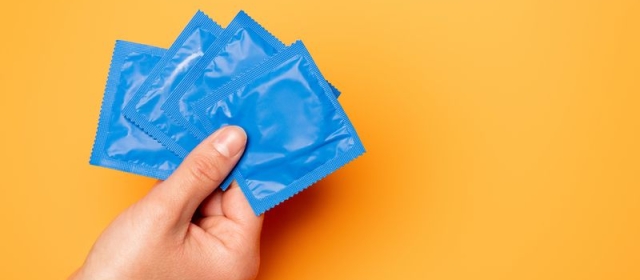
Whether you received sex education in school as an adolescent or you were never taught about sexuality and relationships, it is likely that you could still benefit from sex education as an adult.

Gender-affirming vaginoplasty is a surgery to create a vaginal canal and vulva (including the clitoris) for transgender, non-binary, or gender diverse individuals who wish to align their physical characteristics with their gender identity. People who undergo gender-affirming vaginoplasty may have different goals or priorities related to their gender expression, the appearance of their genitals, and/or their sexuality when it comes to surgery. For some, the ability to orgasm after vaginoplasty is an important goal.
Dear ISSM members,
The publication committee (PUBCOM) of the ISSM is pleased to announce an opening for the Editor-in-Chief position for ISSM’s journal Sexual Medicine Reviews – see the attached job description.
The editor will serve a 3-year initial term with a possibility of a 5-year extension based upon evaluation by the PUBCOM and the executive committee of the ISSM. Applications should be sent to the ISSM business office
Applications should contain:
- A current CV with complete bibliometric data, according to Scopus, and a full description of previous experiences on Editorial Boards of related journals
- A description of applicant’s vision for the journal with special reference to how to brand the journal and how it fits into the ISSM publishing portfolio.
- The applicant must also include the names and contact details of two referees.
Applicants from all over the world, of different gender and ethnicity, of different scientific backgrounds related to sexual medicine will be welcome.
The applicants will be screened by the Search Committee Members on receipt of the necessary documents by the business office of the ISSM by the deadline of July 31, 2022. Finalists will be interviewed by members of the search committee in September/October 2022.
Applicants should be ISSM Full members in good standing.
It is anticipated that the editor’s term will begin January 1, 2023. An honorarium commensurate with the role of the editor will be available.
Search Committee Members:
- Emmanuele A. Jannini, Italy – PUBCOM Chair
- Lawrence Hakim, USA – PUBCOM Vice-Chair
- Paolo Capogrosso, Italy – PUBCOM Member
- Serkan Deveci, Turkey – PUBCOM Member
- Hui Jiang, China – PUBCOM Member
- Zdravko Asenov Kamenov, Bulgaria – PUBCOM Member
- Sheryl Kingsberg, USA – PUBCOM Member
- Hyun Jun Park, Korea – PUBCOM Member
- David Rowland, USA – PUBCOM Member
- R. Clinton Webb – USA – PUBCOM Member
- Irwin Goldstein, USA – Current EiC SMR
- Gerald Brock, Canada – President Elect ISSM
- Arthur Burnett, USA – Treasurer ISSM
- Annamaria Giraldi, Denmark – President ISSM
- Kwangsung Park, Korea – Secretary General
- Luiz Otavio Torres, Brasil – Past President ISSM
Job description - Editor-in-Chief Sexual Medicine Reviews
About Sexual Medicine Reviews:
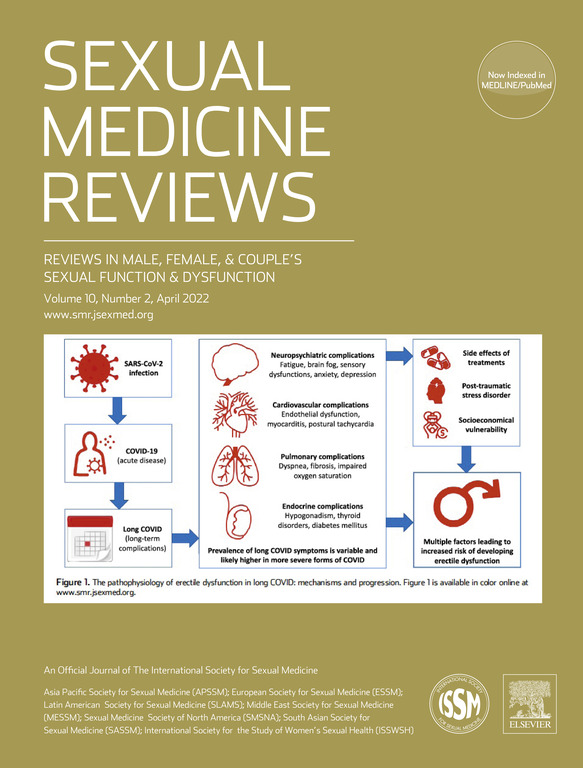 Sexual Medicine Reviews (SMR) publishes invited evidence-based in-depth reviews, (both systematic and narrative), of the highest caliber on multi-disciplinary clinical or translational topics in Sexual Medicine. It may also publish official society consensus reports. These reviews, published quarterly, embrace wide-ranging, comprehensive subject matter related to male, female, and couples sexual function and dysfunction.
The scope of SMR must reflect the diversity of subjects in basic science and clinical practice that define sexual health, sexual function, sexual dysfunction, and sexual medicine. SMR is targeted at the sexual medicine investigator, practitioner, and trainee, but is also explicitly intended to appeal to, and serve the needs of, a broader audience of generalists and specialists with interest in, or in need of a high-quality overview of, a specific topic in sexual medicine.
Sexual Medicine Reviews has been included in PubMed since 2020 and has an Impact Factor of 4.836.
Responsibilities:
The Editor-in-Chief (EIC) is the head of the editorial team of SMR. The EIC is responsible for:
- Solicitation of systematic, scoping and narrative reviews across a broad spectrum of It is expected that a balance of subjects and gender‐related sexual health issues is covered annually.
- Ensuring an adequate flow of material to meet the publication schedules. (Solicited articles must be peer-reviewed through ScholarOne with the Editor making reviewer assignments and manuscript )
- Assembling sufficient copy for the publication of 4 issues a year.
- Assisting in the appointment of other members of the editorial team for the journal.
- Attending conferences to promote the journal and develop and/or expand the network of contacts within the field to serve as a pool of both potential authors and reviewers.
- Chairing Editorial Board meetings.
- Working cooperatively with the Managing Editor’s office and periodically liaise with the publisher.
- Monitoring journal performance to identify areas for improvement and take action as appropriate.
- Ensuring that appropriate editorial standards are upheld.
- Building excellent communications and relationships with Editorial Board Members and authors.
It is imperative that the EIC is held in high regard by colleagues in the field of sexual medicine, with a significant number of publications and proven experience as a subject thought-leader.
It is imperative that the EIC has sufficient, and regularly scheduled time to devote to the success of this journal.
Experience, Skills and Qualifications:
- A physician with postgraduate qualification/experience in sexual medicine, endocrinology, psychiatry, urology, andrology, and gynaecology or a psychologist with postgraduate qualification/experience in sexual medicine or a related discipline with an appreciation for sexual function and dysfunction of both genders in order to maintain a balance of content
- An interest in scientific research and current knowledge and future directions of the field
- Knowledge of typical editorial and peer review processes
- Strong analytical/critical appraisal skills
- Excellent communication and influencing skills
- Excellent time management and prioritization skills
- Ability to work cooperatively with colleagues at all levels
- Ability to provide leadership to the editorial team
- Ability to read and write fluently in English
- A global perspective is required as the journal represents a variety of international societies.
- An active member of the ISSM and remain so during his/her tenure.
- Have previous editorial experience (as an Editorial Board Member, Associate Editor and/or Deputy Editor or Editor-in-Chief of scientific journals in the field)
Term and Compensation:
- The editor will serve an initial 3-year term with the possibility of a 5-year extension based upon an evaluation by the Publication Committee and the Executive Committee of the ISSM.
- It is anticipated that the Editor’s term will begin January 1, 2023.
- An honorarium commensurate with the role of the editor will be available.
Application:
- Applications should be sent to the ISSM executive office (
This email address is being protected from spambots. You need JavaScript enabled to view it. ) by July 31, 2022. - The applicant must include a current CV. The applicant must include 2 letters of recommendation from active ISSM members.
- Applicants should be ISSM full members in good standing.
- The prospective editor’s proposal should include a list of possible topics for three issues, including a wish list of Authors. Authors should be well published, from many different regions, representing research in different aspects of men’s and women’s sexual health.
At ISSM, we are committed to being an inclusive society where all individuals are treated with fairness and respect. We believe that diversity is one of the cornerstones of a vibrant culture and we seek to promote the benefits of diversity in all of our activities. We welcome applications for our open editor position from people of all backgrounds, irrespective of age, disability, sex, sexual orientation, nationality, ethnic or national origin, religion or belief.
Contact details:
ISSM Executive Office
Zaanweg 119a, 1521 DS Wormerveer, The Netherlands
Phone: +31-75-6476372
Fax: +31-75-6476371
E-mail:

All urologists actively in practice treating sexual health conditions are being asked to participate in this survey of study organizer Sarah Schrup, led by study investigator Matthew Ziegelmann.
The purpose of this research is to explore personal and practice characteristics of sexual medicine urologists as well as job satisfaction and wellness.
Please use this link to complete the survey: https://tinyurl.com/2p85xbc9
- This is a research study. Being in this research study is your choice; you do not have to participate. If you decide to join, you can still stop at any time. You should only participate if you want to do so. You will not lose any services, benefits or rights you would normally have if you choose not to take part.
- Study participation involves responding to a short survey (around 5 minutes). No information about you that could be used to identify you will be collected (ie. name, date of birth, medical record number).
- There are no immediate risks associated with this study. There are no costs to you for being in the study. The goal of the study is to gather information; you will not directly benefit from participation.
- You may contact the study organizer Sarah Schrup at
This email address is being protected from spambots. You need JavaScript enabled to view it. or study investigator Matthew Ziegelmann atThis email address is being protected from spambots. You need JavaScript enabled to view it. .

An erogenous zone is any part of the body that elicits sexual arousal when touched. Although most people think of the genitals when it comes to sexual touch, other parts of the body are erogenous zones as well and can bring a person great sexual pleasure. In fact, a 2016 study that mapped the preferred erogenous zones of 704 participants found that the entire body can be sensitive to sexual touch, but erogenous zones vary from person to person.
Public
Providers
Members Only
Newsletter
ISSM Update
Sign up here to receive ISSM Updates and stay informed about sexual medicine, ISSM news, events, and more.