
Exploring Botulinum Toxin for Treatment of Male Sexual Dysfunction - An Expert Opinion
Background
Male sexual dysfunction, including erectile dysfunction (ED), premature ejaculation (PE), and Peyronie’s disease (PD), is highly prevalent and tends to have a significant impact on men’s health globally. The normal courses of treatment for these include pharmacological routes, like phosphodiesterase 5 inhibitors (PDE5-is) for ED, physiotherapeutic routes, like the stop-start method for PE, and surgical routes for PD and ED. However, even the most standard options have their drawbacks, sometimes leading to frustration and further distress among patients.
- PDE5-is can cause uncomfortable side effects that lead to patient withdrawal,
- Patients may not always adhere to physical therapy regimens,
- Surgical interventions are not necessarily reversible, which means they should be a last resort and can delay satisfactory treatment.
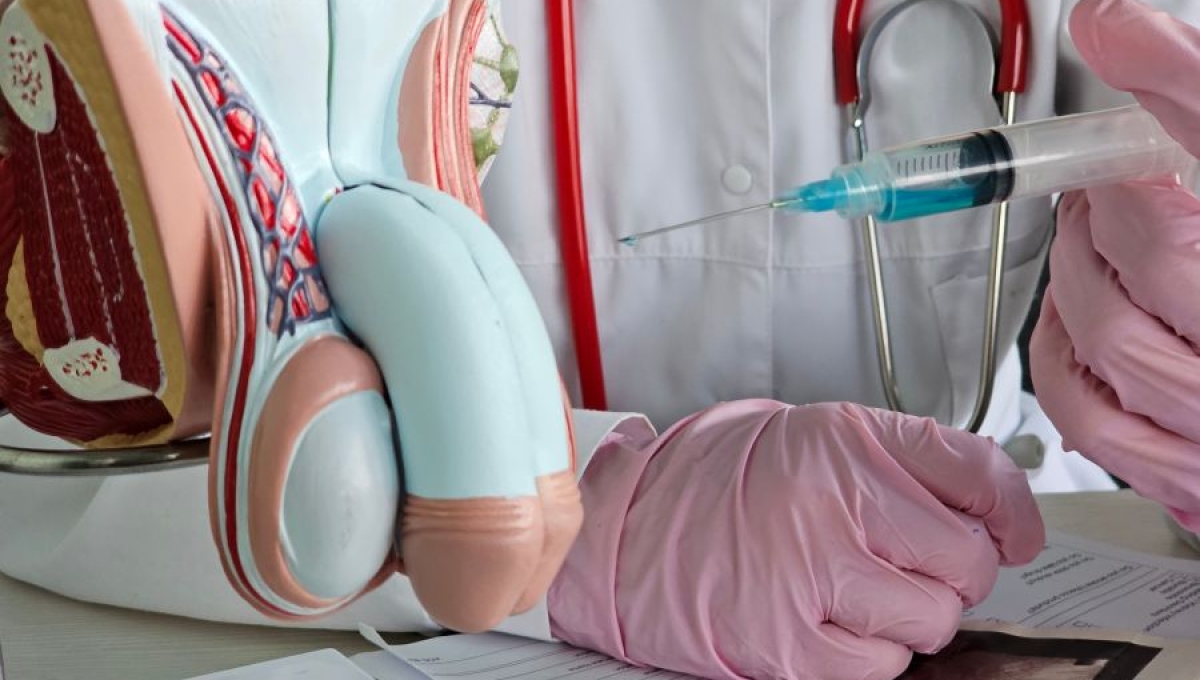
aonabotulinumtoxinA(BTX), known colloquially as Botox, has been cropping up in recent discussions surrounding the treatment of ED and other sexual dysfunctions in both men and women. In the case of male sexual dysfunction, BTX offers a unique alternative to more traditional intracavernosal injections (ICIs) and similar treatments, with varied success.
Study Objectives
- To provide a narrative expert opinion.
- To contextualize emerging and heterogeneous evidence surrounding BTX for male sexual dysfunction.
Methods
- Reviewed studies from 2019 and newer that were looking into BTX as a treatment for male sexual dysfunction.
- Studies primarily focused on ED, PE, and PD.
- Studies did not include non-human or preclinical trials.
- Studies mainly included small, randomized trials, observational studies, or case series involving patients with treatment-refractory disease.
- Mainly focused on men who were not responding to conventional and well-established treatments, such as PDE5-is, vacuum devices, and conventional ICIs.
- BTX was primarily administered in a single session,
- Most commonly used onabotulinumtoxinA (50-100 U) or abobotulinumtoxinA (250-500 U), diluted in 2-10 mL of saline solution and injected in 2-4 sites along the corpora cavernosa.
- Studies used the International Index of Erectile Function – Erectile Function domain (IIEF-EF), the Sexual Health Inventory for Men, and the Erectile Hardness Scores as tools for measurement.
Key Results/Analysis
- For ED, BTX may be able to induce smooth muscle relaxation and improve vasodilation and blood flow, which is the main culprit in organic ED.
- These studies used BTX in tandem with PDE5-is, which highlights the role of BTX as an effective adjunctive treatment measure.
- Due to the heterogeneity of studies and their use with other treatments, BTX cannot be completely deemed effective at treating ED on its own.
- The studies surrounding BTX and PE involved injections into the bulbospongiosus muscle.
- Both studies indicated BTX as a short-term solution for PE, with subjective patient satisfaction.
- Despite ejaculation latency improvements, partner satisfaction did not improve.
- To treat PD, intraplaque BTX injections were intended to disrupt fibroblast activity and reduce both curvature and plaque thickness.
- Curvatures decreased from around 33° to around 25° after 16 weeks.
- Plaque thickness decreased from 0.34cm to 0.27cm after 16 weeks.
- IIEF scores improved.
- Pain with erection decreased.
- Objectively, this study was successful, but the follow-up period and lack of standardization in treatment protocols do not allow researchers to eliminate concerns.
Key Takeaways
- BTX ICIs are generally well-tolerated, with little adverse effects noted.
- Side effects may include mild penile pain, transient hematomas, and (rarely) priapism.
- There is not enough information at present to confirm BTX ICIs as effective and safe for treating ED, PE, and PD.
- Future researchers should consider longer follow-up periods, more consistent treatment protocols, and larger sample sizes.
Resources
- Cilio, S., Henriques, M., Ramos, P., Tsampoukas, G., Capece, M., Boeri, L., Pozzi, E., Pandolfo, S. D., Verze, P., Salonia, A., Cruz, F., Martins-Silva, C., & Morgado, A. (2026). Are we ready to explore administration of botulinum toxin in the management of male sexual dysfunctions? The Journal of Sexual Medicine, 23(3). https://doi.org/10.1093/jsxmed/qdag033
Public
Providers
Members Only
Newsletter
ISSM Update
Sign up here to receive ISSM Updates and stay informed about sexual medicine, ISSM news, events, and more.