




Male Chastity Devices and BDSM
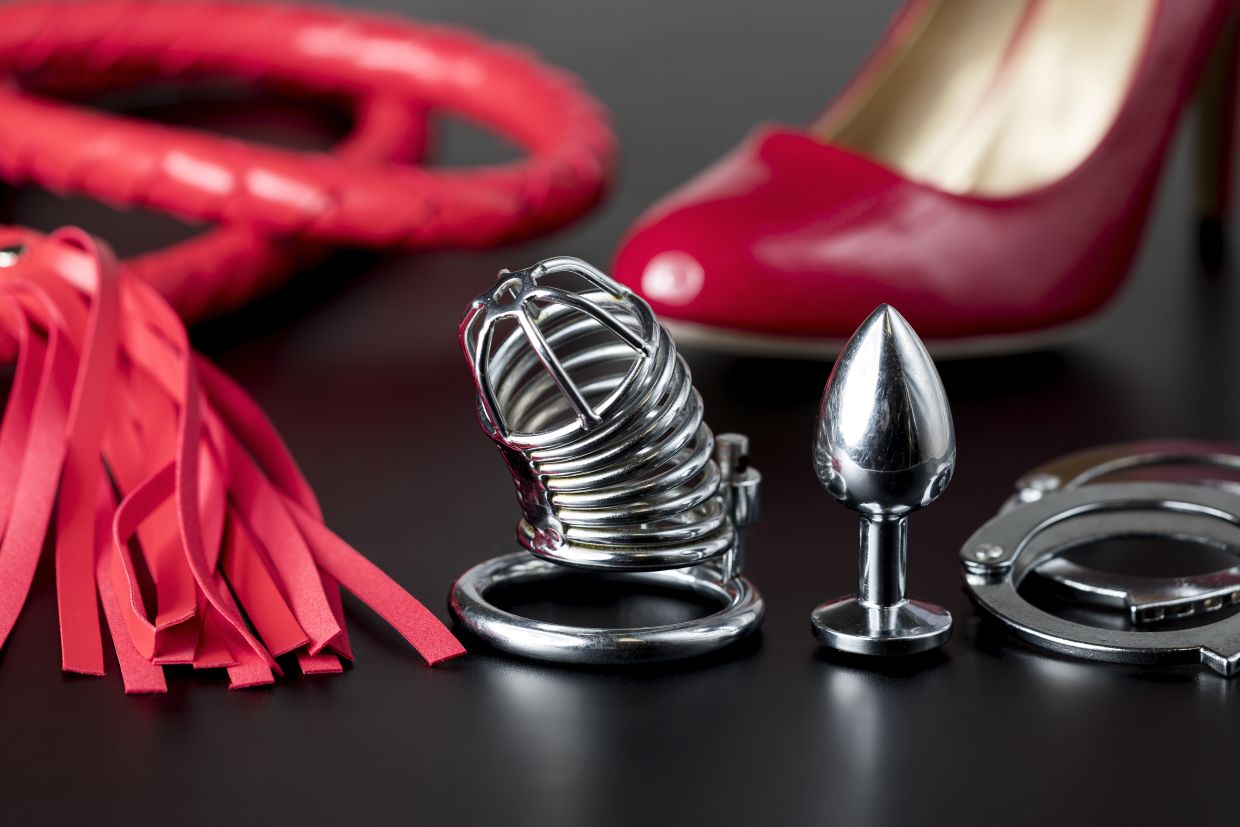
BDSM has become more common in popular culture in recent years and may seem intimidating. However, bondage-discipline, dominance-submission, sadism, and masochism (BDSM) is a sexual practice that can involve sex toys and other devices. Often, this involves a “dominant” partner and a “submissive” partner. BDSM is less about pain and more about exploring power dynamics and sexuality in a mutually pleasurable and consensual way.
Devices used for BDSM are not always exclusive to the practice. Some individuals may view them as a way to spice up their sex life every once in a while, and some may use devices to help with sexual dysfunction. However, knowing what to keep an eye out for when using these devices is the first step toward safe play.
Common BDSM Devices
Restraints are used by many people, both inside and outside the BDSM community. These include materials such as belts, ropes, tape, and straps, which can be used to control or restrict movement. Those who use restraints may enjoy the sensation of giving up control or being restrained in general. Generally speaking, restraints are relatively safe, and many may view them as an entry point to trying BDSM.
Blindfolds and sensory play introduce suspense and anticipation, which can be enjoyable for some. Sensory play may also involve devices like headphones for audio porn. Removing the sense of sight or hearing can heighten the other senses and make for a more intense experience. Other sensation-related devices include feathers, candle wax, ice cubes, vibrators, and nipple clamps.
Impact and breath play may involve choking, slapping, squeezing, and scratching. This level of impact may sting or hurt, but if the receiver finds it pleasurable, it may be enjoyable. It’s important to be wary of where the impact is occurring and to study best practices before engaging in this kind of play. It may also be helpful to include a safe word or hand signal if speech is unavailable.
Genital and testicular play, also known as “cock and ball torture,” refers to impact play that is localized to the penis and testicles. This may include squeezing, punching, or stepping on the penis and testicles to inflict pain.
Constriction bands (“cock rings”) work by sitting at the base of the penis to stop blood from flowing back out of the penis once it is erect, to prolong erections. Beyond providing a pleasurable experience for some, constriction bands have also been recommended to men who struggle with premature ejaculation (PE) or erectile dysfunction (ED) in tandem with vacuum erection devices.
Chastity devices, or “cages,” fit over the penis and are secured around the testicles with a ring. These can be used to prevent full erections or any physical stimulation. Users may experience enhanced pleasure and satisfaction upon ejaculation. The mindfulness and anticipation involved in focusing on controlling one’s erection may also create a more sensual experience.
Many enjoy these practices, and there can be benefits to using them. The goal of BDSM and similar sexual play is to engage in it with mutual consent and to do so safely. Communication, including safe words or signals, is key to safe and pleasurable exploration and practice. Along with communication, education is highly important for safe BDSM encounters.
What Are Harmful Circumstances to Look Out For?
Priapism occurs when a penis remains erect for more than four hours and requires immediate medical intervention to avoid further harm. Ischemic priapism can lead to necrosis, or tissue death. If the erection lasts for more than four hours, the blood in the erect penis begins to lose oxygen and can cause the surrounding tissues to die.
Testicular rupture occurs when intense pressure tears the outer layer of the testicle (tunica albuginea), exposing the sperm-producing tubes. This may be a concern during testicular play, but some researchers have also expressed concern about the use of chastity devices or constriction bands. The positioning of the scrotum while wearing either device may place extra pressure on an already swollen testicle. It is rare for this kind of injury to happen. It takes around 50 kg of force to rupture a testicle. If this type of play is consensual and not too aggressive, it should be relatively safe.
For all penile or testicular injuries, it is important to keep an eye on pain levels, as well as the time. Periodically check how the penis and testicles feel. If the penis is hard or rigid with a soft glans (tip), or if there is testicular swelling, it is likely time to stop and seek medical help.
Infertility risk may be associated with the use of chastity cages. Limited evidence exists to support the idea that, while wearing the device, the testicle may become hotter than is safe for sperm production. Additionally, lack of movement and blood flow may cause scrotal hypothermia.
Key Takeaways
- BDSM is a widely accepted sexual practice that can be safe and pleasurable if practiced consensually and correctly.
- Men who partake in BDSM may enjoy restraints, sensory and breath play, and wearing chastity devices or constriction bands. They may also enjoy pain inflicted on their bodies or penile and scrotal areas.
- BDSM is safe and enjoyable when some Cs are followed: 5 Cs- Clarity on the acts, correct way of practice, clear consent, care about safety, communication with health care providers where needed.
Resources
- Cesur, E., & Sancak, B. (2024). Evaluation of sexual behavior and sexual functions of BDSM practitioners: A controlled study. Archives of Neuropsychiatry. https://doi.org/10.29399/npa.28527
- De Neef, N., Coppens, V., Huys, W., & Morrens, M. (2019). Bondage-discipline, dominance-submission and sadomasochism (BDSM) from an integrative Biopsychosocial Perspective: A Systematic Review. Sexual Medicine, 7(2), 129–144. https://doi.org/10.1016/j.esxm.2019.02.002
- Essien, F., Eagle, Z., Tate, J., & Barber, A. (2022). Testicular rupture: The other nutcracker syndrome. Clinical Medicine Insights: Case Reports, 15. https://doi.org/10.1177/11795476211052416
- Labrecque, F., Potz, A., Larouche, É., & Joyal, C. C. (2021). What is so appealing about being spanked, flogged, dominated, or restrained? answers from practitioners of sexual masochism/submission. The Journal of Sex Research, 58(4), 409–423. https://doi.org/10.1080/00224499.2020.1767025
- Miranda, E. P., Taniguchi, H., Cao, D. L., Hald, G. M., Jannini, E. A., & Mulhall, J. P. (2019). Application of sex aids in men with sexual dysfunction: A review. The Journal of Sexual Medicine, 16(6), 767–780. https://doi.org/10.1016/j.jsxm.2019.03.265
- Pandher, K., Stubbee, R., Peta, A., & Sylora, J. (2020). Penile necrosis induced by rubber bands – case report. Urology Case Reports, 33, 101372. https://doi.org/10.1016/j.eucr.2020.101372
- Wang, J. L., & Raad, R. J. (2026). Male chastity devices: Considerations for prostate and Testicular Health. The Journal of Sexual Medicine, 23(6). https://doi.org/10.1093/jsxmed/qdag163
- Walker, A. M., Kuperberg, A., & Lutmer, A. (2026). “it’s at odds with how I live my life”: Masculinity, gender, BDSM roles, and Identity Disclosure. Sex & Sexualities. https://doi.org/10.1177/30333717261450983
- Wuyts, E., & Morrens, M. (2022). The Biology of BDSM: A systematic review. The Journal of Sexual Medicine, 19(1), 144–157. https://doi.org/10.1016/j.jsxm.2021.11.002
Popular Mental Health & Psychology Questions
Popular Sexual Health Management & Treatments Questions
Popular Men's Sexual Health Questions
Public
Providers
Members Only
Newsletter
ISSM Update
Sign up here to receive ISSM Updates and stay informed about sexual medicine, ISSM news, events, and more.