



What Are the Risks of Contracting Sexually Transmitted Infections Through Oral Sex?
Engaging in sexual activities can bring pleasure and foster intimacy between partners, but it’s essential to understand the risks involved, particularly regarding sexually transmitted infections (STIs). While many people are aware of the risks associated with vaginal or anal intercourse, the potential for STI transmission through oral sex is often overlooked. The following article will explore the risks of contracting STIs through oral sex and discuss effective strategies for reducing these risks.
Understanding the Risks: Contrary to common misconceptions, oral sex isn’t entirely risk-free when it comes to STIs. While the transmission risk for some infections might be lower compared to vaginal or anal intercourse, it is still possible to contract various STIs through oral-genital contact. STIs such as chlamydia, gonorrhea, syphilis, herpes, and human papillomavirus (HPV) can all be transmitted through oral sex. Additionally, HIV transmission is also a concern, although the risk is generally lower compared to vaginal and especially anal sex.
The STIs mentioned above can be spread from an infected person’s genitals to the mouth of the person preforming oral sex, or from an infected person’s mouth to the genitals of their sexual partner. For example, chlamydia and gonorrhea, which are bacterial infections, can infect the throat when one is performing oral sex on an infected partner’s genitals. Then, a person with a throat infection of this nature could pass it on to another person’s genitals by giving them oral sex.
Herpes, caused by the herpes simplex virus (HSV), can be transmitted through contact with herpes sores (blisters or ulcers) present on the genitals or mouth. While HSV-1 is usually associated with oral herpes and HSV-2 is usually associated with genital herpes, both types can be transmitted to either location through oral sex.
Reducing the Risk: Fortunately, there are several steps individuals can take to reduce the risk of contracting STIs through oral sex.
- Communication: Open and honest communication between sexual partners is crucial. Discussing sexual health, STI testing, and boundaries can help ensure that both partners are on the same page and can make informed decisions about their sexual activities.
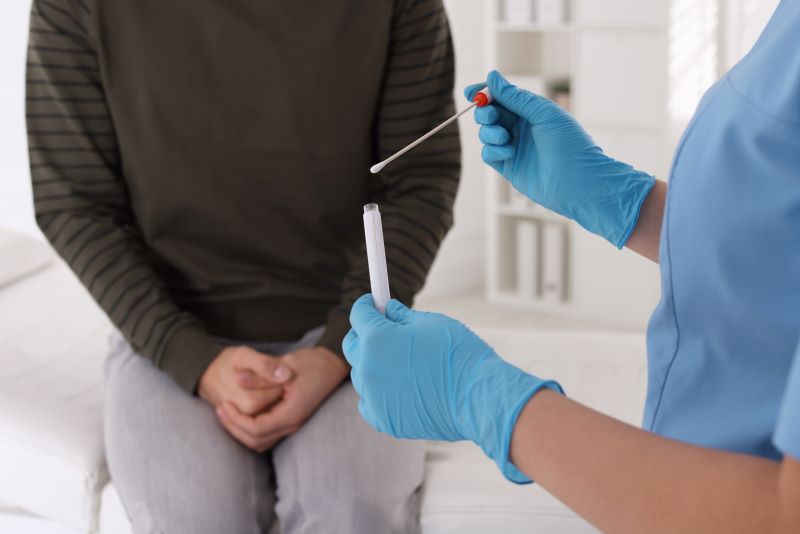
- STI Testing: Regular STI testing is essential for anyone who is sexually active, including those who engage in oral sex. Getting tested regularly can detect infections early and facilitate timely treatment, reducing the risk of transmission to partners.
- Condom Use: While traditional condoms are designed for vaginal or anal intercourse, flavored condoms can be used during oral sex to provide a barrier between the mouth and genitals, reducing the risk of STI transmission. However, it is important to note that condoms do not offer complete protection against all STIs, particularly those transmitted through skin-to-skin contact like herpes and HPV.
- Dental Dams: Dental dams are thin, flexible sheets of latex or polyurethane that can be used as a barrier during oral sex. Placing a dental dam over the genitals or anus creates a barrier between the mouth and potentially infectious bodily fluids, reducing the risk of STI transmission.
- Limiting Partners: Limiting the number of sexual partners and choosing partners who have been tested for STIs can also reduce the risk of infection. Engaging in sexual activities within a mutually monogamous relationship with an STI-free partner can significantly lower the risk of STI transmission.
It is important to recognize that STI transmission can occur during oral sex. Understanding the risks associated with oral sex and taking proactive measures to reduce those risks are vital steps in protecting sexual health. By prioritizing sexual health and adopting risk-reduction strategies, individuals can enjoy the intimacy of oral sex while minimizing the risk of STI transmission.
References:
- Centers for Disease Control and Prevention. (2024). STDs & HIV – CDC Fact Sheet. Retrieved from https://www.cdc.gov/hiv/about/index.html
- Mayo Clinic. (2023). Sexually transmitted diseases (STDs). Retrieved from https://www.mayoclinic.org/diseases-conditions/sexually-transmitted-diseases-stds/symptoms-causes/syc-20351240
Popular Women's Sexual Health Questions
Popular Sexually Transmitted Infections/Diseases (STIs/STDs) Questions
Popular Men's Sexual Health Questions
Public
Providers
Members Only
Newsletter
ISSM Update
Sign up here to receive ISSM Updates and stay informed about sexual medicine, ISSM news, events, and more.