


What are some nonsurgical treatments for an enlarged prostate (benign prostatic hyperplasia – BPH)?
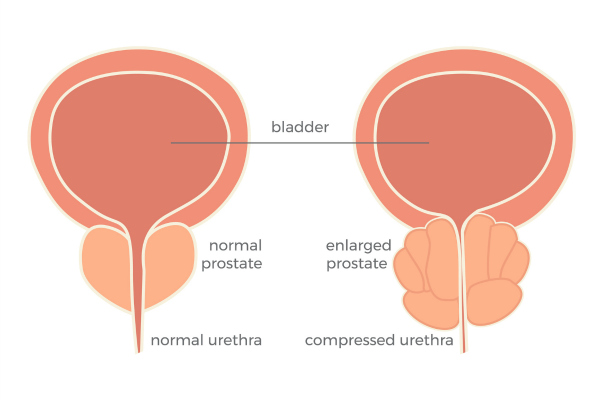
Benign prostatic hyperplasia (BPH) – an enlarged prostate – is very common in older men. It occurs when prostate tissue grows inward, sometimes squeezing the urethra. Some men with BPH have a difficult time urinating.
While there are several minimally-invasive and surgical treatments available to men with BPH, doctors often recommend nonsurgical approaches first.
Watchful Waiting
Also called active surveillance, this treatment takes a “wait and see” approach. A man is diagnosed with BPH and has regular checkups to monitor prostate growth. If symptoms worsen, or if new symptoms occur, then treatment will begin.
Watchful waiting might be recommended for men with mild BPH, with symptoms that are not especially troublesome. They might try lifestyle changes, like drinking less fluid before bedtime and cutting down on caffeine and alcohol, to manage urinary problems.
Medications
Generally, two types of medications are used to treat an enlarged prostate:
- Alpha blockers. These drugs improve urine flow by relaxing the muscles in the prostate and the bladder neck. They usually work quickly. Examples include terazosin (Hytrin), doxazosin (Cardura), tamsulosin (Flomax), alfuzosin (Uroxatral), and silodosin (Rapaflo). These drugs may cause ejaculatory difficulties.
- 5-Alpha reducatase inhibitors (5ARIS). 5ARIs, such as finasteride (Proscar) and dutasteride (Avodart), alleviate BPH symptoms by stopping any further prostate growth and shrinking the prostate. These drugs are recommended for men who have an especially large prostate. 5ARIs may have sexual side effects, such as ED and low sex drive.
Another nonsurgical treatment option for men with BPH is combination therapy, in which both an alpha blocker and 5ARI are taken at the same time, either as separate pills or in one pill. This treatment can be appropriate for men with a large prostate and more severe symptoms.
Daily tadalafil 5 mg treatment is also approved to treat the signs and symptoms of BPH as well as a combination of BPH and ED when the conditions coincide.
BPH can also be treated with minimally-invasive procedures and surgery.
Resources
- Harvard Health Publishing/Harvard Medical School - “Watchful waiting can do the job of BPH medications for some men”
(November 2013)
https://www.health.harvard.edu/press_releases/watchful-waiting-can-do-the-job-of-bph-medications-for-some-men
- Urology Care Foundation - “Medical Therapies”
http://www.urologyhealth.org/urologic-conditions/benign-prostatic-hyperplasia-(bph)/treatment/medical-therapies
- “Watchful Waiting/Active Surveillance”
http://www.urologyhealth.org/urologic-conditions/benign-prostatic-hyperplasia-(bph)/treatment/watchful-waiting/active-surveillance
- UpToDate - “Patient education: Benign prostatic hyperplasia (BPH) (Beyond the Basics)”
Cunningham, Glenn R., MD and Dov Kadmon, MD
(Topic last updated: September 12, 2017)
https://www.uptodate.com/contents/benign-prostatic-hyperplasia-bph-beyond-the-basics
Popular Medications & Sexual Health Questions
Popular Sexual Health Management & Treatments Questions
Popular Men's Sexual Health Questions
Public
Providers
Members Only
Newsletter
ISSM Update
Sign up here to receive ISSM Updates and stay informed about sexual medicine, ISSM news, events, and more.