



How Do Microplastics Affect Sexual Health?
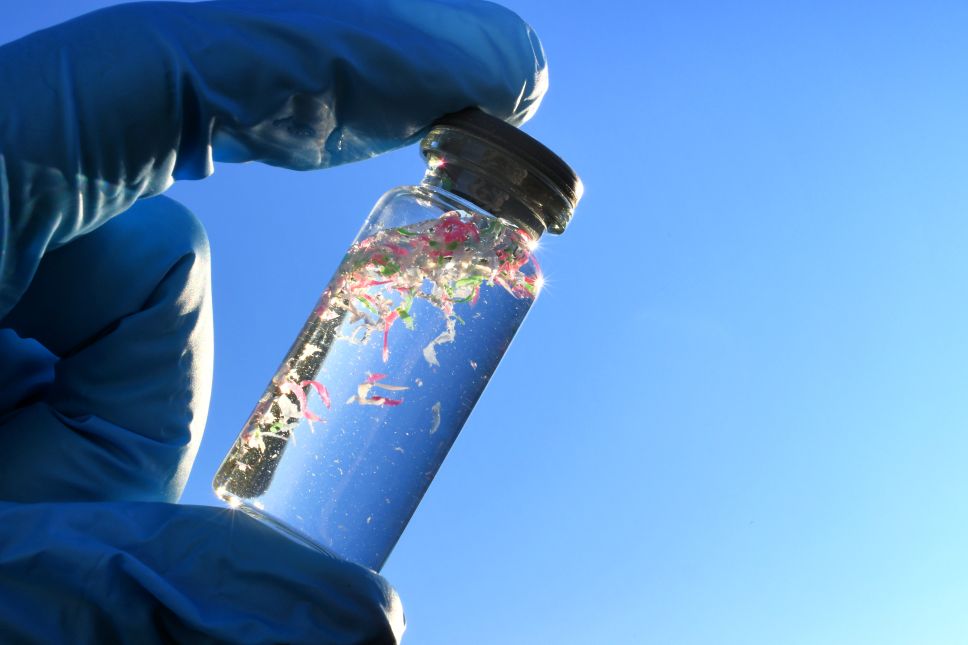
Microplastics are plastic particles under 5mm in size and have been a popular area of concern amongst the general population and many health and wellness experts. Microplastics come from the breakdown of plastic waste that floats through the ocean or is not properly disposed of, leading to the pollution of waterways and breathable air. Most often, this conversation revolves around seafood (including salt), and fruits and vegetables.
The dangers of microplastics have been studied more in the past several years, leading to interesting discoveries about cancer, immune health, and more. But is there enough research to determine how microplastics might affect one’s sexual health?
Male Sexual Health Implications
Unfortunately, most research that is relevant to sexual health focuses more on reproductive effects than on sexual function. However, there is still enough research that alludes to microplastics affecting erectile function.
One study has found microplastics in the penises of patients with severe erectile dysfunction (ED) who were scheduled for penile prosthesis placement surgery. How these microplastics entered the penile tissue remains unknown; despite the lack of further research, this finding may lead to the assumption that microplastics can be found anywhere in the body.
Microplastics can also cause disruptions in normal processes, such as hormone regulation (specifically testosterone) and endothelial function (blood flow control). Ultimately, low testosterone and endothelial function are key contributors to erectile function. If the few studies on these system disruptions are proven accurate, it may be true that microplastics can contribute to ED.
Some other results of microplastic damage include blood vessel injury, systemic inflammatory response, nervous system damage, and damage to smooth muscle function. In addition, fibrotic tissue damage has been found, which can lead to male sexual dysfunction such as Peyronie’s disease. This could cause penile curvature, often resulting in painful sex or ED.
Female Sexual Health Implications
In addition to assessing the effects of microplastics on reproductive and fetal health, not much other research has been conducted surrounding female sexual health, but many results point to sexual dysfunction, such as dyspareunia (pain with sex).
One study did find that microplastics in menstrual products like pads or tampons can be absorbed in the cervicovaginal area and found in cervical mucus and vaginal discharge. The authors of this study recommended avoiding non-organic disposable menstrual products to avoid this happening.
As with men, microplastics can also disrupt the regulation of important hormones like estrogen and testosterone, which are essential for certain female sexual responses. Lack of lubrication or arousal responses can often lead to dyspareunia.
Disruptions in essential hormone regulation and other endocrine systems may contribute to breast cancer. One study found that microplastics may increase the size of cancer cells. However, they could not conclude whether or not the microplastics impacted the speed of cell growth. Essentially, microplastics may contribute to increased risk of metastasis (when cancer cells travel to other parts of the body) and overall cancer progression.
Microplastics may also disrupt ovarian function and have been found in endometrial tissue. Despite being only slightly more researched than microplastics and sexual function, endometriosis and polycystic ovarian syndrome (PCOS) symptoms like polyps and fibroids can result in dyspareunia and other vulvovaginal pain.
Finally, microplastics have been shown (in one study) to contribute to pelvic pain. Whether this was a result of endometriosis or pelvic floor dysfunction was not clear. However, most of the time, pelvic floor muscle dysfunction and pelvic pain can be extremely bothersome and disrupt normal sexual functioning in women and men alike.
Key Takeaways
- Research in this area is still in the investigational phase, with many tests being conducted on animals, such as rats.
- For now, keep an eye on global communications such as ISSM, WHO, etc., for urgent findings and updates regarding microplastics and sexual health.
- Because there is so little testing, it is important to speak with a sexual health professional about any concerns surrounding ED, Peyronie’s disease, and sexual pain – they will know how to treat your sexual dysfunction without sacrificing a coveted shrimp scampi.
Resources
- He, S., & Zhang, Y. (2025). Detection and quantification of microplastics in endometrial polyps and their role in polyp formation. Reproductive Toxicology, 132, 108757. https://doi.org/10.1016/j.reprotox.2024.108757
- Inam, Ö. (2025). Impact of microplastics on female reproductive health: Insights from animal and human experimental studies: A systematic review. Archives of Gynecology and Obstetrics, 312(1), 77–92. https://doi.org/10.1007/s00404-024-07929-w
- Liu, S., Wang, W., Zhang, Y., Li, S., Jia, H., Liu, S., Wu, L., Dou, P., Li, J., Jiang, C., & Zhao, F. (2026). Polyethylene terephthalate microplastics impair erectile function through macrophage mediated cgas-sting ferroptosis. iScience, 29(3), 115044. https://doi.org/10.1016/j.isci.2026.115044
- Liu, W., Qu, Z., Wang, X., Feng, H., Ma, S., Zheng, Y., Lin, G., Huang, S., Yang, Q., Feng, X., Shen, T., & Liu, N. (2024). Microplastic exposure is associated with male reproductive health. Medical Review, 4(6), 549–552. https://doi.org/10.1515/mr-2024-0069
- Mishra, S. K., Sanyal, T., Kundu, P., Kumar, R., Ghosh, D., Chakrabarti, G., Sikdar, N., Bhattacharya, S., Paul, S., & Das, A. (2025). Microplastics as emerging carcinogens: From environmental pollutants to oncogenic drivers. Molecular Cancer, 24(1). https://doi.org/10.1186/s12943-025-02409-4
- Park, J. H., Hong, S., Kim, O.-H., Kim, C.-H., Kim, J., Kim, J.-W., Hong, S., & Lee, H. J. (2023). Polypropylene microplastics promote metastatic features in human breast cancer. Scientific Reports, 13(1). https://doi.org/10.1038/s41598-023-33393-8
- Pontecorvi, P., Ceccarelli, S., Cece, F., Camero, S., Lotti, L. V., Niccolai, E., Nannini, G., Gerini, G., Anastasiadou, E., Scialis, E. S., Romano, E., Venneri, M. A., Amedei, A., Angeloni, A., Megiorni, F., & Marchese, C. (2023). Assessing the impact of Polyethylene Nano/microplastic exposure on human vaginal keratinocytes. International Journal of Molecular Sciences, 24(14), 11379. https://doi.org/10.3390/ijms241411379
- Saha, U., Kumari, P., Ghosh, A., Sinha, A., Jena, S., Kirti, A., Gupta, A., Choudhury, A., Simnani, F. Z., Nandi, A., Sahoo, R. N., Kumari, S., Mishra, R., Kaushik, N. K., Singh, D., Suar, M., & Verma, S. K. (2024). Detrimental consequences of micropolymers associated plasticizers on endocrinal disruption. Materials Today Bio, 27, 101139. https://doi.org/10.1016/j.mtbio.2024.101139
Popular Women's Sexual Health Questions
Popular Men's Sexual Health Questions
Public
Providers
Members Only
Newsletter
ISSM Update
Sign up here to receive ISSM Updates and stay informed about sexual medicine, ISSM news, events, and more.